
Answer Engine Optimization (AEO) vs Generative Engine Optimization (GEO): Avoid These Costly Mistakes to Win AI Search in 2026
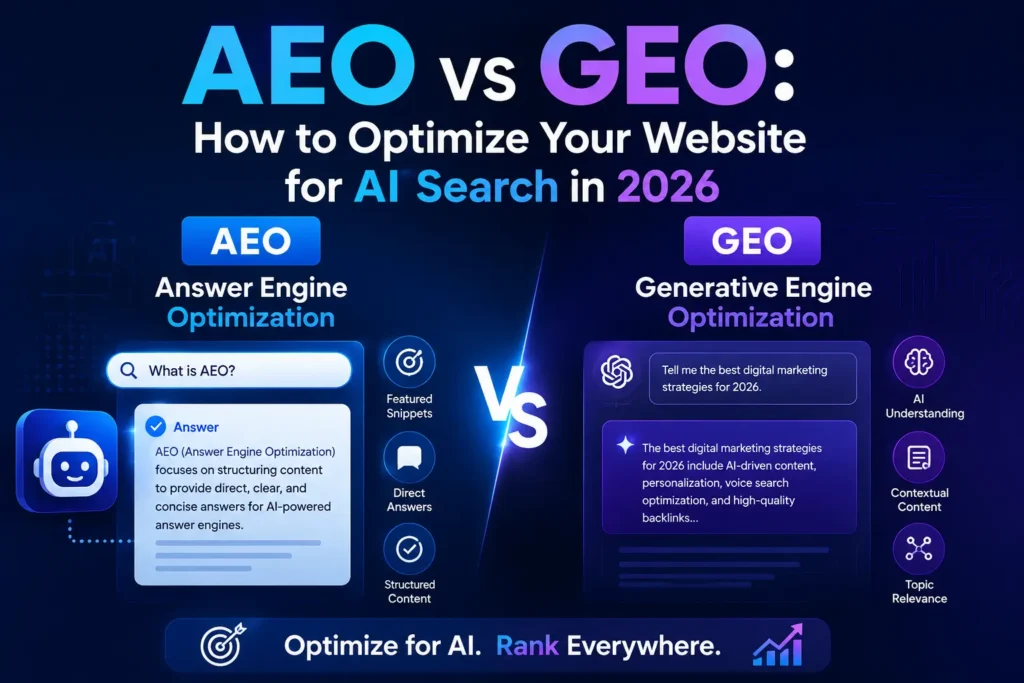
What is AEO
Answer Engine Optimization
(AEO) is the process of creating and optimizing content so that search engines and answer engines can easily understand and provide it as a direct answer to a user’s question.
For example, instead of searching for “What is digital marketing?” a user may ask, “What is digital marketing and how does it work?” Search engines may provide a direct answer instead of simply displaying a list of websites.
To improve AEO, your content should answer common questions clearly and directly. Using proper headings, FAQs, short paragraphs, bullet points, and structured information can make your content easier for search engines to understand.
What is GEO
Generative Engine Optimization
Search is changing rapidly. People are no longer using search engines only to find websites. Today, users can ask questions directly to AI-powered search tools and receive summarized answers within seconds. This change has created new opportunities for businesses and content creators through AEO and GEO.
AEO stands for Answer Engine Optimization, while GEO stands for Generative Engine Optimization. Both strategies help businesses make their content more visible in AI-powered search results.
(GEO) focuses on optimizing content for AI-powered generative search engines. Tools such as AI search platforms can analyze information from different sources and generate a complete answer for users.
GEO helps increase the chances of your brand, website, products, or expertise being mentioned in AI-generated answers.
For example, if someone asks an AI search engine to recommend digital marketing services in Kerala, the AI may consider information from different websites before creating its response. Well-structured, useful, trustworthy, and relevant content can improve the possibility of being included.
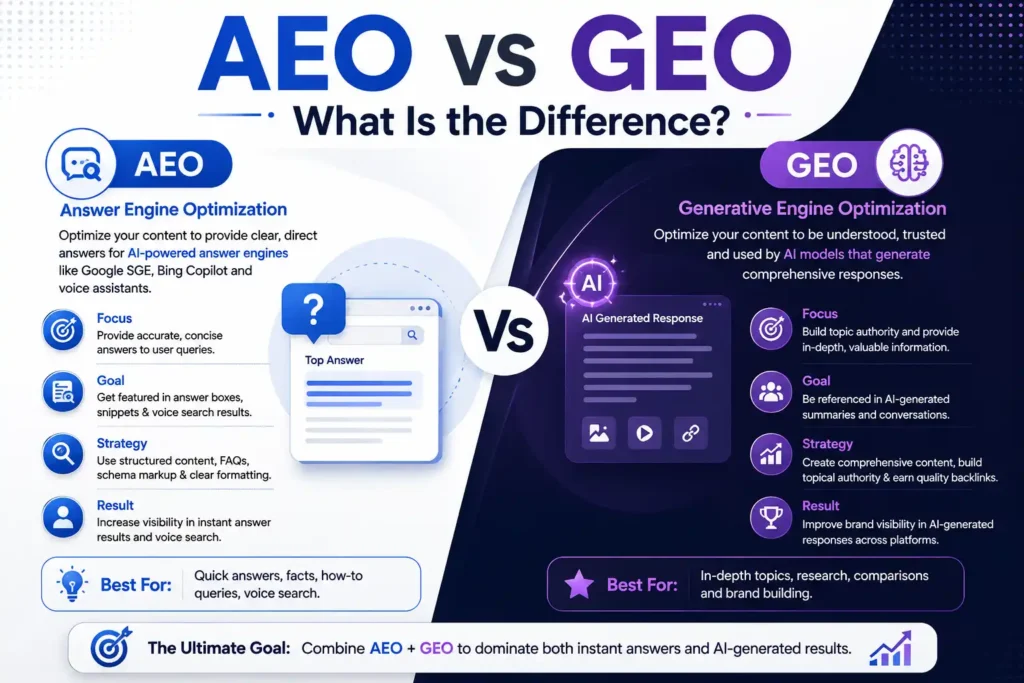
AEO vs GEO: What is the Difference
Although AEO and GEO have similar goals, they focus on slightly different areas.
AEO mainly focuses on providing direct answers to user questions. It is closely connected with question-based searches and featured answers.
It aims to make your content useful and recognizable to generative AI systems.
In simple terms, AEO helps your content answer questions, while GEO helps your content become part of AI-generated answers.
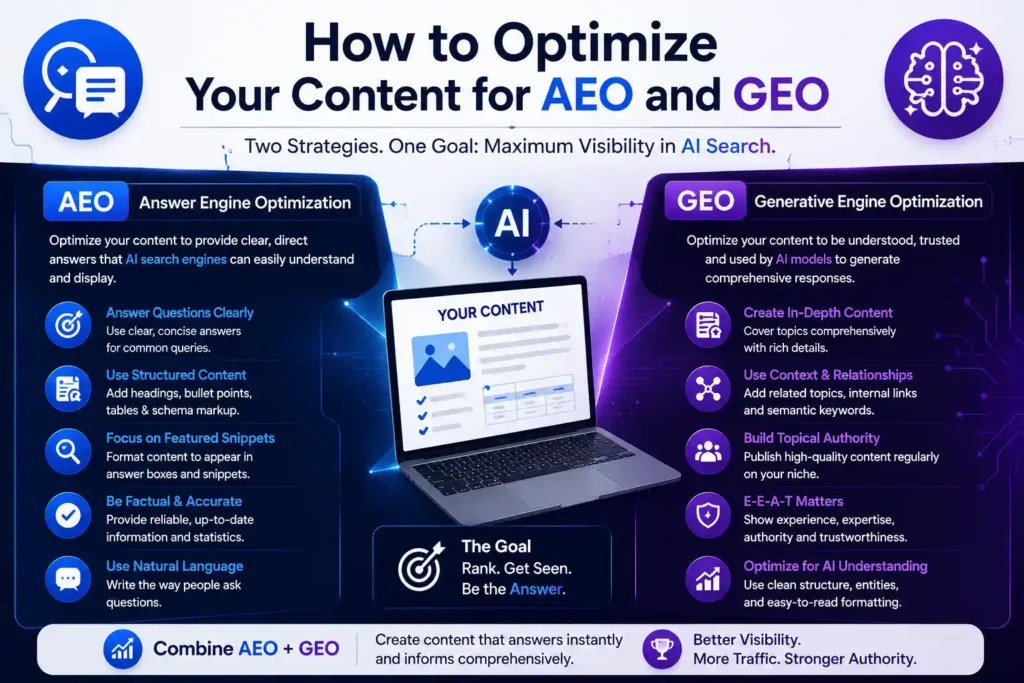
How to Optimize Your Content for AEO and GEO
Businesses can follow several simple practices to improve their AEO and GEO strategy.
First, create content that answers real questions from your target audience. Use natural language and avoid unnecessary keyword stuffing.
Second, organize your content with clear H1, H2, and H3 headings. This helps both users and search engines understand the structure of your content.
Third, provide accurate and useful information. AI systems are more likely to use content that demonstrates expertise, relevance, and credibility.
You should also include FAQs, statistics, examples, definitions, and step-by-step explanations where appropriate.
Finally, maintain your website’s technical SEO. A fast, mobile-friendly, secure, and well-structured website provides a better foundation for both traditional SEO and AI search optimization.
Why AEO and GEO Matter in 2026
AI-powered search is becoming an important part of how people discover information online. Traditional SEO is still important, but businesses should also think about how their content can appear in
AI generated search experiences.
By combining SEO, AEO, and GEO, businesses can create content that is useful for both traditional search engines and modern AI-powered platforms.
Conclusion
Answer Enigine Optimization and Generative Engine Optimization are becoming essential for modern search optimization. AEO helps your content provide clear answers, while GEO improves visibility in AI-generated responses. By creating helpful, structured, trustworthy, and user-focused content, businesses can strengthen their online presence and stay competitive as AI-powered search continues to grow in 2026.